



Which SUV Fits Fort Worth’s Roads? 2025 Mazda CX-30 vs. 2025 Honda HR-V
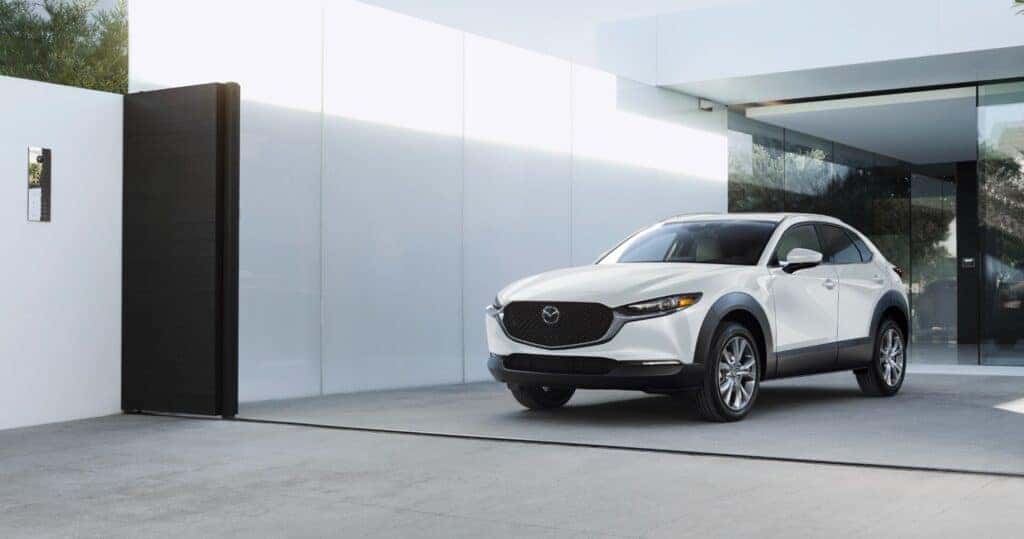
Image provided by Mazda
If you’re seeking a new subcompact SUV in Fort Worth, you have two solid contenders to consider: the 2025 Mazda CX-30 and the Honda HR-V. The HR-V gives you space and practicality, while the CX-30 delivers driving excitement and refined performance. Our Hiley Mazda of Fort Worth team has reviewed the car comparison specifications for power, comfort, design, and value to help you find the right match for your travels around Texas.
Driving Performance
Honda’s HR-V comes with a 2.0-liter four-cylinder engine making 158 horsepower at 6,500 rpm and 138 lb-ft of torque at 4,200 rpm. It’s paired with a continuously variable transmission (CVT) that shifts smoothly but may feel sluggish when trying to merge onto Interstate 35 West or Loop 820; the HR-V takes 9.4 seconds to accelerate from 0 to 60 mph.
Its gas mileage is good: front-wheel-drive models achieve 26 mpg in the city, 32 mpg on the highway, and 28 mpg combined, while all-wheel-drive (AWD) versions manage 25 mpg in the city, 30 mpg on the highway, and 27 mpg combined.
The CX-30 is a bit sportier. Its standard SKYACTIV-G 2.5-liter four-cylinder engine produces 191 horsepower and 186 lb-ft of torque, working with a six-speed automatic transmission that shifts with more character than Honda’s CVT. The turbo option generates up to 250 horsepower and 320 lb-ft of torque on premium gas, making it quick in its class. This extra power really helps when merging onto busy Fort Worth highways or climbing hills around the Trinity River. The CX-30 matches the HR-V’s fuel efficiency: 26 mpg in the city and 33 mpg on the highway, while giving you i-ACTIV AWD standard across all models.
Interior Experience
If your family needs more room, you’ll appreciate the Honda HR-V’s dimensions. It offers 98.7 cubic feet of passenger space, compared to 94.1 cubic feet in the CX-30. Back seat riders aren’t cramped either, with 37.7 inches of legroom. Four adults fit comfortably, and the 60/40-split back seat adds flexibility. Nice materials and smart storage in the cabin round out the package.
The CX-30 prioritizes the driver. It’s a little smaller than the HR-V, but the quality makes up for it. The materials look and feel more luxurious, leather seats are available, and the overall design appears more upscale. Everything’s laid out with the driver in mind, putting controls right where you need them.
Tech features differ between these two small SUVs. All 2025 Honda HR-Vs now feature a 7-inch screen as standard, while the 9-inch display is optional; both provide wireless Apple CarPlay and Android Auto compatibility. The EX-L trim includes an eight-speaker, 180-watt sound system, plus wireless charging and remote features through HondaLink.
The Mazda CX-30 comes standard with an 8.8-inch display, while higher trims feature a 10.25-inch screen. Options include a Bose 12-speaker system and wireless charging on certain models. Both SUVs’ infotainment systems work well, though you may find the CX-30’s controls more intuitive for everyday use.
Exterior Design
The Honda HR-V’s dimensions are larger than those of the CX-30. This extra size creates a roomier interior, making it ideal if you require maximum space. Most HR-Vs come standard with 17-inch wheels, which provide good initial grip.
Mazda’s CX-30 takes up less space; it’s 7 inches shorter than Mazda’s compact CX-5, firmly placing it in the subcompact category. Its smaller size makes parking a breeze in downtown Fort Worth. The CX-30 is a product of Mazda’s KODO: Soul of Motion design theme, featuring a sportier look with flowing lines, a bold front end, and sharp LED headlights. Base models come standard with 17-inch wheels, but higher trims include 18-inch wheels.
FAQ
Below are some of the most common questions we’re asked when comparing the CX-30 and HR-V.
Which Vehicle Offers Better Value for Money?
The Honda HR-V starts at $25,400, while Mazda asks $24,995 for the base CX-30. The gap widens on higher trims: the HR-V EX-L tops out at $30,895 MSRP, but the CX-30 2.5 Turbo Premium Plus has a higher MSRP of $36,950. U.S. News car comparisons suggest that if space and basic features are more important to you, the HR-V delivers; however, the CX-30’s performance is superior, offering more driving enjoyment.
What Are the Cargo Space Differences Between the Two?
The HR-V has 24.4 cubic feet of cargo space behind the back seats, expanding to 55.1 cubic feet with those seats folded. The CX-30 offers 20.2 cubic feet of cargo space behind the rear seats, with a maximum capacity of 45.2 cubic feet. In real-world testing, however, the CX-30 handled standard luggage sets just fine, proving practical enough for most Texas families.
Which Vehicle Is More Reliable?
According to U.S. News, the HR-V scores 82/100 for reliability while the CX-30 gets 76/100. Consumer Reports predicts that the 2025 HR-V will surpass the average new car in terms of dependability.
Which Vehicle Is Better for City vs. Highway Driving?
Both SUVs handle well. The CX-30 has the edge with its stronger engines and quicker steering response in stop-and-go traffic. The CX-30’s turbo option is helpful for merging and passing on the highway. The HR-V offers a smoother, more settled ride over long stretches.
Are There Hybrid Options Available?
Neither the 2025 HR-V nor the CX-30 currently offers a hybrid option. Both continue to use traditional gas engines, tuned to strike the optimal balance between efficiency and power.
Which Vehicle Has Better Safety Ratings?
Both the HR-V and CX-30 earned the International Institute of Highway Safety’s Top Safety Pick+ award for 2025 and received five-star ratings from the National Highway Traffic Safety Administration. Both have similar safety technology as standard equipment, making either choice a solid option for safety-conscious families in the Dallas-Fort Worth area.
How Do the Overall Rankings Compare?
U.S. News ranks the CX-30 second among subcompact SUVs, while the HR-V is listed at number 10. The CX-30 scores 9.1/10 overall, compared to 8.6/10 for the HR-V. Car and Driver critics love the CX-30; it is rated 9.5/10 compared to the HR-V’s 8/10.
HR-V vs. CX-30
The HR-V wins on passenger space, cargo room, reliability scores, and starting price. The Car and Driver comparison praises the Honda for having one of the smoothest rides in its class despite its modest power.
The CX-30 has stronger engines, better rankings, higher scores from critics, slightly better gas mileage, and standard AWD on all models. It’s one of the quickest in its class, making it ideal if you appreciate responsive handling and enjoy a fun driving experience.
Experience the Mazda CX-30 at Hiley Mazda of Fort Worth Today
If you want to know which SUV is right for you, contact our team at Hiley Mazda of Fort Worth to schedule a test-drive. We have a number of new Mazda CX-30 SUVs for sale and can let you experience the CX-30’s performance firsthand. Our team will help you compare both vehicles and find the right fit for your needs, budget, and driving style.
0 comment(s) so far on Which SUV Fits Fort Worth’s Roads? 2025 Mazda CX-30 vs. 2025 Honda HR-V