



What Are The Main Differences Between Mazda 2WD, 4WD, and AWD?
Mastering the Mechanics: The Distinctive World of 2WD, 4WD, and AWD
Choosing the right drive train for your needs is a big part of shopping for a new car or SUV. View our new Mazda inventory in Fort Worth, TX. Your decision between 2WD, 4WD, and AWD will depend a lot on the driving conditions you encounter and your lifestyle. All three configurations are excellent under certain conditions, but all three can, in some situations, be the wrong choice for you. Learning a little more about how 2WD, 4WD, and AWD work from our Mazda experts will help you navigate this decision and choose the right Mazda setup for your needs.
Two-Wheel Drive (2WD)
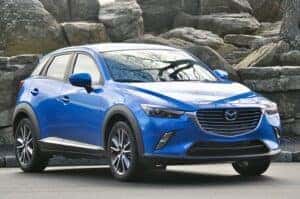 Two-wheel-drive cars are vehicles that supply power from the engine to only two of their four wheels. The other two wheels still turn and provide stability, but the two wheels receiving power are responsible for accelerating your ride. There are two types of 2WD car: front-wheel drive (FWD) and rear-wheel drive (RWD). FWD models are much more common on the road, but there’s still an important place for RWD models, as you’ll soon see. You’ll also find FWD setups in a broader range of vehicles, including small cars, larger SUVs, and even some pickups. The FWD setup is typically the standard in most base trims. For example, the Mazda 3 compact sedan features FWD with its 191-horsepower four-cylinder engine. Power trains like these are ideal for city driving, and can handle the highway just as well in a sedan or small crossover. The pressure of the engine on the wheels helps improve traction and handling. In addition, FWD cars typically have the best gas mileage. This makes the FWD drive train a good pick if you’re searching for a vehicle to perform the daily commute to work. That being said, these vehicles are less well suited to challenging terrain and bad weather. The decision you’ll need to make is whether it’s worth the extra fuel cost to get the performance benefits associated with AWD. RWD models are typically restricted to sports cars, and crossovers or trucks with an off-roading focus. The advantage of RWD is that it provides extra stability when handling your vehicle. This comes in handy, for instance, if you’re taking a sharp corner in the Mazda MX-5 Miata or shifting this small sports car up to highway speeds. RWD is also popular in larger vehicles when you’re tackling rough terrain, since it gives the driver more control. Finally, a truck with a heavy load at the rear can benefit from RWD to better manage its hauling tasks, although the heaviest towing jobs often call for AWD or 4WD for better stability and traction.
Four-Wheel Drive (4WD)
In most vehicles, 4WD is an option that you can activate when needed. As its name suggests, a 4WD drive train provides power to all four wheels of your vehicle. You’ll obtain more grip and control with 4WD when you’re navigating steep slopes, traversing uneven ground, and dealing with muddy or slippery surfaces. However, the drawback to 4WD is that it requires more fuel and therefore usually results in a poorer fuel economy than 2WD drive trains. You, therefore, need to decide if it’s a feature that suits your needs. The most common place to find 4WD is in off-road specialist SUVs produced by the likes of Jeep and Ford. These brawny vehicles are often equipped with additional off-roading features, like skid plates, hill descent control, and all-terrain tires. Within the 4WD segment, there are different versions of four-wheel drive for high-performance vehicles. These can include 4WD systems capable of adjusting the amount of power delivered to a specific wheel as opposed to delivering a constant supply of power to all four. If you’re looking for a truck, the decision on whether to opt for RWD or 4WD may ultimately come down to price. In a lot of truck lineups, the base trims tend to be equipped with RWD. This setup is sufficient for a standard work truck and is capable of impressive towing and hauling feats. However, if you need this performance on rough terrain, stepping up to a 4WD-supported trim could make sense.
All-Wheel Drive (AWD)
AWD falls somewhere in between 2WD and 4WD. Unlike 4WD, AWD vehicles don’t require the intervention of the driver to activate the AWD system. Instead, these vehicles can send power to all four wheels whenever you drive. This system is ideal for larger passenger carriers, like big sedans or large SUVs. AWD also serves you well if you drive in difficult conditions, such as light snow or heavy rain. An AWD crossover will also be able to handle a trail or two. There are many examples of AWD in the Mazda lineup. The subcompact CX-30 SUV comes equipped with a four-cylinder engine and AWD in its base trim. If you’re searching for a larger vehicle, the roomier CX-50 also relies on an AWD drive train. These crossovers will serve excellently as daily road vehicles, while they also retain the capability of reaching your campsite or a lake if you decide to explore Texas in your free time. The only drawback to AWD is that it reduces the fuel economy slightly in your vehicle compared to an FWD model. If you’d like to find out what it’s like to test drive an AWD Mazda in Fort Worth, we’d be delighted to arrange this. You can chat to one of our sales experts in-person or contact us online to make the arrangement.
Find Your Perfect Fit: 2WD, 4WD, or AWD at Hiley Mazda of Fort Worth
Now that you know a bit more about the key differences between 2WD, AWD, and 4WD, we hope you can make an informed choice about your next vehicle purchase. In summary, 2WD vehicles are ideal if you need a car or small crossover for day-to-day driving. AWD vehicles give you the added flexibility of being able to tackle challenging driving conditions and navigate a light trail while still driving effectively on the road. 4WD trucks and SUVs are best for high-performance when off-roading and towing heavy loads. Find your perfect fit at Hiley Mazda of Fort Worth, Texas.
0 comment(s) so far on What Are The Main Differences Between Mazda 2WD, 4WD, and AWD?